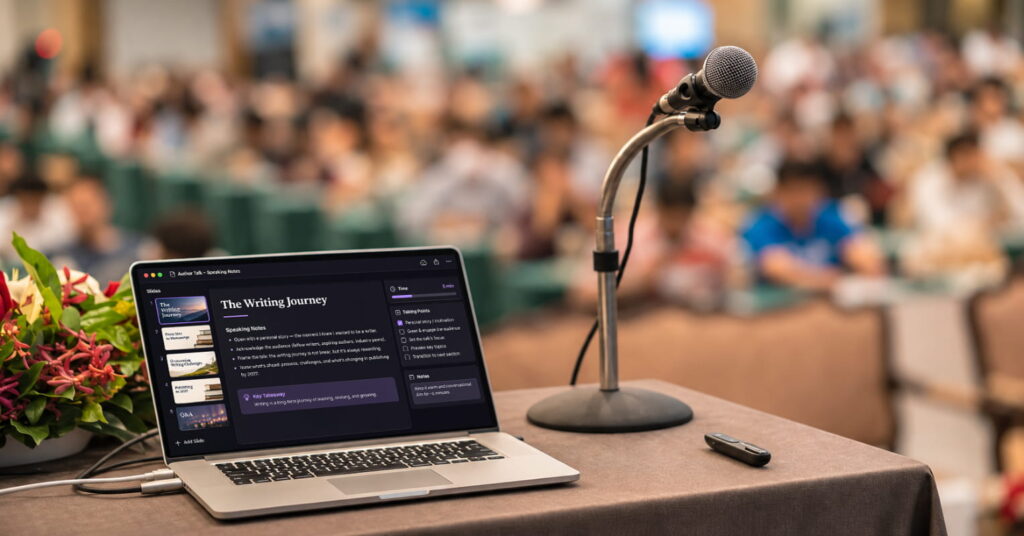
Although writing can often seem like a very solitary activity, attending conferences or workshops gives you the opportunity to learn alongside other writers. Attend lectures and presentations about various aspects of writing or publishing. Participate in hands-on activities or hear from authors and industry professionals, and exchange ideas with people who understand the work behind a finished book.
Various workshops and conferences cater specifically to writers looking to improve themselves in one aspect or another. Plotting, editing, and learning to write in specific genres are among the topics covered at these specialized writing events. Others provide a space where aspiring authors can meet agents, editors, or other successful authors face-to-face.
This list brings together writing conferences and workshops taking place in 2027, so you can compare locations, dates, and programs to find an event that fits your goals.
The Key West Literary Seminar Writers’ Workshop Program gives writers four days to work with a small group on a particular aspect of craft. The 2027 lineup spans fiction, poetry, memoir and other nonfiction, with offerings that range from generating new material to discussing work already in progress. That range gives applicants a choice about how to spend their time. A poet can look for a workshop built around drafting and revision, while a fiction writer can choose one that uses manuscript critiques to examine how a story develops.
The Key West Literary Seminar is a four-day program for readers and writers that takes up a different literary subject each year. In 2027, it returns to poetry after the restoration of Elizabeth Bishop’s former Key West home. The program brings together poets and translators whose work gives readers several ways to listen to the same form. For a writer, those conversations offer a chance to consider how poets continue earlier traditions, take them in new directions or bring a poem into another language.
The winter session of Pacific University’s Residency Writers Conference is a ten-day program of scheduled instruction for writers outside the MFA degree. Mornings typically begin with a craft talk and small-group workshops, followed by a choice of talks, panels, and classes in the afternoon. Faculty and students give readings in the evening. Alongside MFA students, conference participants attend six workshops in fiction, creative nonfiction, or poetry, with up to ten writers in each group. Over those sessions, each writer receives a close critique of their manuscript and offers feedback on their peers’ work. Conference participants can attend with or without academic credit.
The Winter Poetry & Prose Getaway is a writers’ conference organized around three-day workshops in poetry, fiction, memoir, songwriting and other forms. Participants spend those days with one workshop, moving between craft discussion, prompts, writing time and feedback. That continuity gives them room to develop an idea and hear how the writing comes across to others. Poets who want to generate new work can choose the Poetry Incubator, where feedback sections are capped at ten. The conference also offers a Writer-in-Residence option for participants who want independent writing time while still joining shared events such as open mics.
The Southern California Writers’ Conference in San Diego helps writers assess whether a manuscript is ready to submit and what work it may still need. Manuscript readiness runs through the craft instruction, which helps emerging and experienced writers identify what may still need attention. For a more focused reading, participants can pay separately to have material reviewed in advance by a faculty member of their choice. A writer with a particular concern about a draft can use that feedback to connect the broader conference discussions to decisions on their own pages.
Writers in Paradise is an eight-day writing conference at Eckerd College in St. Petersburg, Florida. Writers apply to a specific workshop, with options across fiction, poetry, memoir and other nonfiction. In full-week workshops, groups of up to 12 read and discuss one another’s manuscripts with an author who works in the form. That sustained conversation gives each writer time to consider what is working on the page and what to revisit in revision. Afternoon craft talks and panels take the discussion beyond individual drafts, and evening readings give participants a chance to hear authors share their work.
Tennessee Mountain Writers’ January Jumpstart is a weekend writing program with separate fiction and poetry tracks. Each track continues across both days, so writers can stay with one genre and build on the work they begin in the first session. Staying with the same form lets writers build on the first day’s work instead of starting a new subject when they return. It also means spending the weekend with others working in fiction or poetry, a useful setting for talking through a craft question and finding a way back into a regular writing practice at the start of the year.
TBR Writing and Publishing Conference gives first-time and established authors different paths through the same program. Someone preparing a first book can choose sessions geared to that stage, while authors working on later books can focus on the decisions that arise after a debut. That career-stage approach carries into a schedule that pairs intensive craft sessions with conversations about publishing. For writers ready to talk about a particular manuscript, the separately booked Publishing Matchmaker takes the publishing conversation one step further. It pairs participants with an agent or editor whose interests fit the project for an individual appointment.
Writing By Writers’ Get the Lead Out! is an online workshop built around starting new work in a group. A faculty craft talk sets up each day’s work, and the small-group exercises that follow let participants try the ideas on the page. Because the exercises are designed to generate writing, participants can begin with a loose idea or let a prompt lead them somewhere new. Writers at different experience levels can use the same format to begin a first project or break out of an established routine.
The Big Sur Children’s Writers Workshops give writers of books for young readers a place to bring a manuscript for close feedback. Applicants submit three sample pages, and writers who take part work on manuscripts in critique groups of up to five. Working in groups that small gives publishing professionals and fellow writers time to respond to individual manuscripts. For the person whose pages are under discussion, that attention can help clarify what a young reader encounters at the start of the story and what to tackle in the next revision. It also gives participants a chance to learn from the questions raised by other manuscripts.
This conference offers seven presentations for novelists, with live questions and recordings to revisit afterward. The presentations take novelists from craft questions, such as developing a character, to the work of explaining a manuscript to someone in publishing. The live questions let participants raise an issue while the subject is fresh, and the recordings give them a way back to it when they are revising. Writers who already have a query letter can take the submission work further by opting for feedback from a literary agent.
The Todos Santos Writers Workshop gives participants a week to concentrate on fiction, memoir, poetry or storytelling. Choosing a workshop lets writers spend that time with people working in the same form and consider what the project needs at its current stage. Several approaches sit within the wider program. Its generative poetry workshop, for example, uses readings and prompts to give poets a way to begin new poems. Writers in the prose or storytelling tracks can spend the week concentrating on the particular craft questions that arise in their own work.
Superstars Writing Seminars is a conference for authors who want to understand the business of publishing and sustain a writing career. The main program asks authors to consider what happens around the writing itself, including how the industry works, how books reach readers and what it takes to sustain a professional practice. Writers who want time on the page before those business discussions can register separately for the Intensive Skills Day. Held before the main seminar, it gives them a chance to work on technique and then think about the publishing decisions that follow.
Fiction and nonfiction writers spend two days online at the San Diego Writing Workshop learning how books make their way to publication. It helps participants consider how agents and editors make decisions and how to present a project when it is ready to go out. The classes connect those decisions to what a writer puts in a query or says in a pitch. For participants with a manuscript ready to discuss, a separately booked appointment by Zoom or phone puts that advice into practice. It gives them time to introduce one project to an industry professional and see which parts of their explanation invite further questions.
StoryCon’s Teen Writing Track is for writers ages 13 to 18 who want to learn from authors of books for young readers. Those classes give young writers a place to work on their own stories, while the main-stage program, exhibit hall and book signings let them see more of the world around the books they read. For teens curious about how a story becomes a book, a separately booked pitch session with an agent or editor offers a closer look at the publishing side.
Writers attending the San Miguel Writers’ Conference & Literary Festival can combine the public literary program with hands-on instruction. The workshop packages build on that literary program by giving participants different amounts of time to work on craft. Some combine shorter sessions with three-hour intensives, so writers can sample several subjects and spend longer on a particular technique. A weekend package also offers a Spanish-language workshop option. The choice of packages gives writers a way to plan how much of the festival they want to spend in class and which kind of instruction fits their work.
The San Francisco Writers Conference brings craft and publishing together, from drafting and editing to deciding how to promote a finished book. Registration includes an initial eight-minute consultation with an editor, book coach or promotional specialist. Writers can use that time to take one question from the broader program and talk through how it applies to their own project.
South Coast Writers Conference is a two-day gathering for Pacific Northwest writers to work on their craft and exchange ideas. The draft schedule for 2027 sets aside Friday for workshops and Saturday for shorter breakout sessions. Friday’s workshops offer more time to work through a writing question, while Saturday’s shorter sessions give participants a chance to see how other writers approach the craft.
The Independent Publishers of New England’s annual conference is an online gathering for independent authors, presses and other publishing professionals. Getting a book to readers gives those groups a shared subject even when their experience differs. A writer considering independent publication can learn what the work involves, while an author already publishing can hear how others make the same kinds of decisions. Because the 2027 program takes place online, writers and publishers beyond New England can join those conversations from wherever they are working.
GenreCon is a Queensland Writers Centre conference centered on the craft and publishing of fiction. Writers can spend the weekend considering how their stories work and learning about the industry that brings those stories to readers. The main program opens on Friday evening and continues with sessions and special events across the weekend. The 2027 theme, Inner Sanctums, focuses on hidden truths and the stories people tell themselves, giving writers a shared lens for exploring character and world-building.
Built for children’s book writers, illustrators, and translators, this conference covers every stage from developing a story to getting it into young readers’ hands. Emerging creators can map out where their work fits in the industry, while a new 2027 track helps already-published authors and artists tackle post-release marketing.
The online Texas Writing Workshop helps fiction and nonfiction writers move their books toward publication over two days of classes on queries, pitches, and book marketing. Writers can also book a separate one-page query critique with Chuck Sambuchino to see what works and what needs refining before querying agents.
Designed for writers at every stage (from beginners starting a draft to published authors), the Central Arkansas Writers Conference offers 2027 sessions spanning young adult fiction craft and independent publishing. Attendees learn how to shape stories for their target readers and bring finished books to market, with eligible writing contest entries included in admission.
New York Write to Pitch is a manuscript and publishing conference for writers with a complete or nearly complete novel or work of narrative nonfiction. Writers join development and pitch groups matched to their genre, where they can consider how their manuscript will be presented and refine the pitch around the project. That work starts before the on-site sessions with access to editorial forums. It continues after the conference through a follow-up writing program, giving participants time to revisit questions that came up while presenting the manuscript.
NICAR’s Data Journalism Conference teaches reporters how to use data to find, develop, and explain stories. The program progresses from entry-level instruction to advanced work with coding and AI, while connecting those methods to specific beats so reporters can start with a question from their own coverage and find a way to answer it.
At the Charlotte Carolina Writing Workshop, writers spend a day learning how to prepare a manuscript for the publishing process. It introduces the work of preparing a query, approaching agents and presenting a manuscript to the industry. For writers still weighing their options, the classes give those steps an order and help clarify what to prepare before submitting. Writers with a project ready to pitch can carry that work into a separately booked online appointment through the Ohio Writing Workshop in April.
The Raleigh Carolina Writing Workshop gives fiction and nonfiction writers a day to work through what comes after completing a manuscript. The day at NC State takes writers through the practical questions that follow a draft, including how to prepare to approach the publishing industry. Participants who want to turn that preparation into a conversation can separately book an online pitch through the Ohio Writing Workshop. Because the appointment happens after the Raleigh event, writers have time to revisit what they learned and sharpen the way they introduce the project.
The Kansas City Writing Workshop guides writers through submission and publishing decisions, highlighted by a first-page critique that shows how agents and editors actually read. During this session, publishing professionals evaluate selected submissions anonymously and explain what compels them to keep reading. Writers can spend the rest of the day learning how to prepare their work for submission, or book a separate individual pitch to shift the focus from how professionals read an opening to how to present the full project behind it.
Indie Network Ireland is a conference about writing and running an independent publishing business. Previously called Ireland’s Publishing Show, it covers craft alongside marketing and publishing technology. That mix reflects the different roles an independent author takes on as a book moves from manuscript to publication. Writers can spend time on how a story is made, then hear how other authors handle the work that follows, including decisions about production, promotion and reaching the readers they wrote the book for.
SleuthFest is the Florida chapter of Mystery Writers of America’s conference for mystery, thriller, and suspense writers. The program gives participants a space to explore how suspense builds, what details to reveal to the reader, and what keeps a mystery moving forward. That craft focus supports writers drafting their very first crime manuscript just as much as those revising a story already in progress. The broader conference also brings participants together with established authors, featuring Lisa Scottoline and Riley Sager as the 2027 guests of honor.
The Alabama Writing Workshop in Birmingham gives writers a day to consider the steps from a manuscript to a submission. The day looks at routes into publishing and the materials writers use to introduce their work, including queries and pitches. Writers can bring those lessons back to their own materials by booking a separate critique of a one-page query with event coordinator Brian Klems. The feedback gives them a specific document to revise after the workshop. It also connects what they learn about the available publishing routes with the smaller decisions about how to introduce a project to an agent or editor.
The Colorado Writing Workshop focuses on preparing a manuscript to approach the publishing industry. The in-person program gives participants a day to work through questions about queries, pitching and routes to publication. Participants can put that preparation to use after the workshop by separately booking online pitches with agents at the California Writing Workshop in June. The gap between the Denver classes and a pitch gives writers time to try the advice on a specific manuscript and revise what they want to say about it before the conversation.
The Chesapeake Writing Workshop gives writers in Arlington a day to consider how to prepare a book for submission. Its classes address how to present a manuscript and approach agents. A separately booked critique of a novel’s first ten pages gives writers a way to apply that advice to their own manuscript. When the reader is taking part remotely, the feedback can be given by phone. That conversation can help a novelist see what an agent would encounter at the opening and what might need to change before sending out the rest.
The Atlanta Writing Workshop offers a day of in-person publishing instruction for writers ready to explore the next steps for their manuscript. The classes help attendees understand how the industry works and figure out how to introduce their project to publishing professionals. For participants ready to deliver that introduction live, the organizer offers separately booked online pitches with agents through the Pittsburgh Writing Workshop in May. That later pitch gives writers time to apply what they learned in class and shape how they present a single manuscript in a one-on-one conversation.
Sirenland Writers Conference brings small groups together to critique fiction and memoir, then gives writers quiet time to start new projects. With workshop groups capped at ten people, participants spend part of the week reading and discussing each other’s pages in detail. Afternoon craft talks and writing sessions shift the focus from editing existing drafts to trying out fresh ideas. Writers can bring a question from their morning workshop into a writing exercise or use the afternoon to start a brand-new piece. This steady routine gives the week a clear balance, mixing close feedback on other writers’ work with open time to explore new material on the page.
The University of North Dakota Writers Conference is a free-to-the-public event whose 2027 program asks, “Who Tells the Story.” This theme brings big questions about voice, point of view, and the responsibility of telling a story to a lineup of authors with roots in the Northern Plains and Midwest. Hearing local writers talk through these ideas helps attendees look at their own projects in a new light, whether they are choosing which character should tell a story or seeing what a different perspective might uncover. Since the event takes place both in Grand Forks and online, readers and writers from anywhere can easily tune in and join the conversation.
The National Undergraduate Literature Conference at Weber State gives undergraduates a chance to present their creative writing and literary research. Students can submit an abstract for consideration and hear how peers from other institutions approach work in different forms. Sharing their writing beyond the classroom also lets students hear the kinds of questions their piece sparks in a brand-new audience. The gathering combines those student presentations with a keynote from author Jacqueline Woodson, giving undergraduates time both to share their own work and to hear from an established author.
The online Atlanta Self-Publishing Conference focuses on the practical work of publishing and selling a book independently. The 2027 program looks at the work an author takes on once a manuscript is ready for readers. That makes the sessions relevant both to someone weighing self-publishing and to an author planning how to reach an audience for a new book. Registrants receive recordings and slides afterward, which gives them a way to revisit a subject when they are ready to put the advice into practice.
Chanticleer Authors Conference brings authors together with people working in publishing, with time devoted to craft and to the way books reach readers. Its program includes more concentrated instruction through a masterclass, alongside opportunities to spend time with other writers and publishing professionals. The conference then turns from discussion of the work to a book fair at Village Books. For participating authors, the fair makes it possible to talk directly with readers about the books they have written, bringing the publishing side of the program into a public setting.
London Screenwriters’ Festival gives scriptwriters a chance to hear their work performed and learn how projects are presented to the industry. Its Actors’ Table Read brings in professional actors and a director to work with writers on hearing how a script plays aloud. Hearing dialogue in performance can reveal where a line lands differently from the way it did on the page. Pitchfest turns that same attention to how a project sounds when the writer describes it to someone in the industry. Together, these two features help scriptwriters think about both what they want an audience to hear in a single scene and what they need to convey about the script as a whole.
The Connecticut Writers Conference is a full-day program focused on choosing a path to publication and preparing to bring a manuscript to market. The 2027 schedule begins by comparing different publishing routes, helping writers decide which option best fits their book before moving on to the practical steps for pursuing it. Participants who are ready to introduce a project can also book a separate one-on-one pitch with an agent or editor. That conversation gives them a chance to test out how they describe their manuscript after clarifying where they want to take it.
The Boston Writing Workshop is an in-person day for fiction and nonfiction writers who want to learn how agents evaluate submissions. The event follows what happens when a writer puts a manuscript in front of someone in publishing. Sessions consider what an agent looks for, then connect those decisions to the way a writer prepares a query or pitch. For an attendee planning to submit work, the day offers time to think about what still needs to be ready and how to describe the project to someone new to it.
The Southern Vermont Writers’ Conference gives fiction, memoir, and poetry writers several days to work closely with a small group and the same teacher. That continuity lets people come back to a question after they have had time to think it over. Picking a specific genre track also helps writers spend the conference tackling issues that come up in the exact type of writing they do.
The Las Vegas Writers Conference is an event on writing craft and publishing for authors of all genres, featuring a First Page Reads session built around anonymous submissions. During the panel, agents and editors react out loud to anonymous opening pages and explain the exact spot where they would stop reading. Listening to their honest feedback ties the conference’s bigger lessons on writing and publishing right back to the actual page. A writer editing their opening can see what a reader truly picks up from it, while someone getting ready to query can spot where an agent or editor might pause. Since the event draws writers from so many different genres, the first-page feedback also lets attendees notice what grabs readers in types of books outside their own.
The online Ohio Writing Workshop helps writers prepare the material they need when approaching an agent or editor. The program addresses pitching, manuscript submissions and what agents look for when deciding whether to read further. For a writer revising with submission in mind, those discussions help connect decisions on the page to the way the project is introduced. Participants from the Carolina Writing Workshops can take that work into separately booked agent appointments through the Ohio event.
BookCAMP is a publishing conference for independent authors who want to understand what happens once a manuscript is finished. The program looks at how writers bring their books to market and what they need to know about protecting their rights along the way. Sessions on contracts and trademarks pair questions about legal ownership and agreements right alongside the practical work of book marketing. That balance gives authors a space to think through the business terms they will run into while publishing and how they plan to reach readers once the book is out.
Toronto Writing Workshop gives writers a day to learn how to present a book for publication. The sessions look at what happens when a project reaches an agent or editor and how a writer can prepare for that first reading. For participants who want to put the advice into practice, separately booked online pitches are available through the New England Writing Workshop in July. The later appointment gives them time to make changes to their approach before they introduce a particular manuscript.
The Writing Workshop of Austin gives writers nearing submission a day to compare publishing routes and think through what each would involve. Comparing those options at the start gives writers a framework for the rest of the day. They can consider which path fits the manuscript they are working on and how much responsibility they want for bringing it to readers. For someone nearing the end of a draft, the workshop offers a place to connect a publishing decision with the practical work they need to do before taking the next step.
The Liberty States Fiction Writers Conference is a one-day program for authors developing their stories and deciding how to publish or promote them. The schedule follows the questions that come up at different stages, from drafting a novel to marketing a book or managing self-publishing. Writers who already have a finished manuscript can take the conversation directly into a pitch appointment with an agent or editor at no extra charge. Those still working toward that milestone can focus on writing craft and figure out which publishing route makes the most sense for their book.
The Bluegrass Writers Coalition’s Conference of Writers offers classes across all genres for both beginner and seasoned authors. The 2027 plans map out two main tracks covering writing skills, publishing, and book promotion. Together, these tracks link the creative choices a writer makes on the page with the real-world steps of getting a book to readers.
The Orlando Florida Writing Workshop gives writers a full day to explore how manuscripts and book proposals are prepared for publication. Its 2027 schedule includes a class on selling a nonfiction book proposal, focusing closely on what publishers expect from the materials an author submits. That session connects the broader work of getting a manuscript ready for publishing with a more specific challenge faced by nonfiction writers. Someone with a book idea can use the class to figure out how to make their topic clear to an editor, then draw on the rest of the program to see what their proposal still needs to show before it is ready to send out.
At the Minnesota Writing Workshop in St. Paul, writers spend a day understanding how publishing professionals evaluate manuscripts. The classes address what to know before approaching a literary agent and how to prepare work for submission. Writers who want to try out that preparation in a conversation can separately book an online pitch with an agent at the New England Writing Workshop later in the year. The time between the St. Paul event and a later pitch gives them room to apply what they learn and revise the way they describe a particular manuscript.
The Tampa Florida Writing Workshop is a one-day program on preparing to publish amid changes in the industry. The session examines the changing landscape, including artificial intelligence and hybrid publishing. The wider one-day program gives writers a way to put those developments in the context of a book they are preparing. After hearing how AI and hybrid publishing are changing the industry, they can consider which routes to publication suit their work and how those choices affect what they need to prepare before approaching the people who might help bring it to readers.
A Rally of Writers gives authors in the Lansing area a full day to sharpen their writing skills and hear how other writers put their books together. Practical workshops and a main keynote talk bring many different types of writing into the same event. People attending can use those classes to sort through tricky spots in a draft they are currently working on. Anyone ready to share a finished project can also book a separate meeting with a literary agent, giving them a chance to practice explaining their book and see which parts still need to be clearer.
The Toronto Indie Author Conference is built around all the choices writers have to make when they publish their own books. It brings self-published authors and industry pros together to talk honestly about the business side of putting out a book. The main weekend schedule walks through the real-world steps writers take as they turn a finished draft into a book for sale. Anyone who is still unsure whether self-publishing is right for them can show up a day early for a separate Friday beginner session. That extra day gives newcomers an easy starting point before the rest of the weekend dives into the bigger business of working as an independent author.
At the Kentucky Writing Workshop, writers spend a day in Louisville learning how to prepare a project for publication. Participants can consider what an agent or editor needs to know about a project and how they might present it clearly. The in-person program is capped at 150 for 2027. After the Louisville sessions, writers ready to discuss their work can separately book an online agent appointment. The later pitch gives participants time to decide which parts of the instruction apply to their project and revise their introduction before the conversation.
The Pikes Peak Writers Conference brings storytellers together for three full days of lessons on how to write and get published. It gives people time to fix tricky spots in their current draft and then look at the real-world steps for getting a book to readers. The daily schedule also leaves plenty of breathing room for relaxed chatting outside the main classes. Speakers and instructors host tables during meals, letting guests talk with published authors and industry pros in a much smaller group. Anyone at the event can take a tip from an earlier lesson straight to the dinner table and figure out how to use it in their own book.
The Tennessee Writing Workshop is a one-day publishing event where authors can hear straight from agents and editors about how a book’s opening reads. During the live first-page critique, anonymous entries are picked at random so publishing pros can explain how the writing sounds to a brand-new reader. Hearing the exact spot where a beginning grabs an agent’s attention helps a writer figure out what information to share right away and what to hold back for later. The rest of the day ties that close look at page one into the larger task of getting a full submission ready, helping guests see how their opening lines match up with the rest of the book they plan to send out.
At Drexel University, the Philadelphia Writing Workshop gives writers a day to consider what a manuscript, query or pitch needs to communicate. The in-person day connects the preparation of those materials to the decisions involved in approaching the publishing industry. Writers can work out what an agent needs to know and how to communicate it in a short meeting. For those who want to try the pitch, separate online appointments are available through the New England Writing Workshop in July. That gives them time after the Philadelphia event to revise how they present the project.
Black Writers on Tour is a conference for authors interested in writing, publishing and getting their books in front of readers. The preliminary 2027 schedule separates the free general program from paid instruction for writers who want to go further into a subject. One of the paid seminars follows a book from the first idea through publication and looks at how authors can market it. That sequence gives writers a way to see where the work of producing and promoting a book fits alongside the time they spend writing it.
The American Society of Journalists and Authors’ online conference focuses on freelance nonfiction writing across journalism, brand content, and books. Its looks at what is changing in those three areas and brings freelance writers and hiring editors together in the same discussions. The event carries those talks over into Client Connections, where qualifying professional members can sit down one-on-one with potential clients. For writers who work in a few different types of nonfiction, the main sessions offer an easy way to compare what different outlets want right now. Those direct chats with hiring editors can also help them figure out where their background as a reporter or book author fits best.
ThrillerFest is International Thriller Writers’ yearly get-together for anyone who writes, publishes, or reads suspense stories. The main schedule lets writers listen to experienced authors talk about crime, characters, and what keeps a plot moving alongside others who work in or enjoy the genre. People who want to spend more of the week practicing those story skills can sign up separately for CraftFest. That extra track gives them a chance to focus closely on how to write well inside a big event made for thriller writers, book pros, and everyday fans.
Washington Writers Conference brings writers together to develop their craft and learn how to approach literary agents. The 2027 program includes a keynote from novelist Alice McDermott, alongside practical opportunities to put a project in front of an agent. On the publishing side, standard registration includes three scheduled agent pitches. For someone preparing to query, those conversations give them a chance to describe the same project to different listeners and see where each wants to know more. Writers who are still developing a manuscript can use the wider program to learn about the decisions that come before that point.
The Michigan Writing Workshop gives writers a day in Livonia to consider how publishing decisions affect a manuscript they are preparing. One session looks at two changes that can affect those decisions, hybrid publishing and the influence of artificial intelligence. The rest of the one-day program brings the focus back to the manuscript and how to prepare it for publication. For writers considering more than one route, the day gives them a way to connect what is changing in the industry with the practical work their own project needs next.
The Writing Conference of Los Angeles looks at publishing from the perspective of authors preparing a manuscript and building an audience for it. A session on author platforms and social media fits right into a one-day program on getting published, helping writers see marketing as a natural step in getting their work into readers’ hands. Anyone aiming for a traditional book deal can use that class to understand the role they will play in making their book visible. For a writer planning to self-publish, the same discussion helps place audience-building right alongside the other practical steps of getting a book ready for the market.
Write the Docs Portland is a conference for technical writers and all the people who work with them on software guides and help docs. The event looks at writing docs as a group job, covering everything from figuring out what readers need to know to making help pages easier to use. Writing Day puts that teamwork into action right when the event kicks off. Guests can jump in on open-source docs and see what coders, designers, and writers each notice in the very same text. For technical writers who team up with product and engineering groups, that early hands-on work ties the rest of the conference talks back to real pages they have already helped make better.
The online Nonfiction Writers Conference covers developing a nonfiction book, getting it published and finding readers. The live pitch session puts the publishing side of that program into practice. Writers in eligible registration tiers can apply to present a short pitch to agents, while others can listen to the feedback. Hearing which details prompt a question gives a writer working on a proposal a way to think about their own explanation. They can ask whether a new listener would understand both what the book covers and who it is for.
The Lakefly Writers Conference offers writers a mix of workshops and a public book fair as it celebrates its 15th anniversary in 2027. Published authors, editors, and librarians lead sessions that give attendees fresh perspectives on how a story is written and how books find their readers. The public book fair carries that energy beyond the classrooms by connecting local and regional authors with people eager to discover their work. Attendees can spend part of the event sharpening their writing craft and then meet readers and fellow authors in a space centered on the books themselves.
The Atlanta Writers Conference centers on professional feedback for writers who want to prepare a manuscript or pitch for publication. That focus shapes the format, with meetings with literary agents and editors at the center of the conference. A writer with a manuscript or pitch in development can make the most of that time by bringing a specific question about the work or how to present it. The conversation then gives the writer something to consider after the meeting, whether that is a clearer way to describe the project or a question to work through before submitting it.
At the Portland Writing Workshop, authors spend a full day learning what they need to prepare before introducing their work to the publishing industry. The 2027 schedule tackles key questions about query letters, pitches, and the current book market, helping attendees figure out what to have ready before approaching an agent or editor. Those lessons can carry straight into a separately booked online pitch with an agent at the Chesapeake workshop. Because that meeting takes place after the Portland event, writers have time to apply what they learned to a specific manuscript first. They can then use the live conversation to see which parts of their book come across clearly and what the agent wants to hear more about.
At the Portland Writing Workshop, authors spend a full day learning what they need to prepare before introducing their work to the publishing industry. The 2027 schedule tackles key questions about query letters, pitches, and the current book market, helping attendees figure out what to have ready before approaching an agent or editor. Those lessons can carry straight into a separately booked online pitch with an agent at the Chesapeake workshop. Because that meeting takes place after the Portland event, writers have time to apply what they learned to a specific manuscript first. They can then use the live conversation to see which parts of their book come across clearly and what the agent wants to hear more about.
The Longleaf Writers Conference combines a week of writing in a chosen genre with opportunities to talk about a manuscript’s path to publication. Intensive and generative workshops let writers discuss work closely and try new approaches, while daily seminars offer time to look beyond a single project. Writers can take questions raised in those sessions into an individual consultation with an agent or editor, which is included with full registration. That meeting shifts the focus from discussing work with the group to considering what may come next for a particular manuscript. The two settings give participants room to spend time on the writing and ask about its possible path to publication.
The Seattle Writing Workshop gives fiction and nonfiction writers a day to work through how to present a project to the publishing industry. The 2027 schedule opens with Query Letter Boot Camp, where participants can think about how to introduce a book to an agent. After working on how to introduce a book, participants can put that skill to use in a separately booked ten-minute pitch with an agent or editor. Writers who want to focus on the manuscript itself can instead book a critique, with options in several genres. These choices connect the day’s publishing advice to the part of a project a writer wants to work on next, from the pages to the submission.
Storymakers Conference brings together writers working on their first books alongside experienced authors preparing to publish again. For anyone still shaping a draft, the optional First Chapter Contest gives registered attendees a great reason to revisit their opening pages and see what they communicate to a brand-new reader. The broader schedule also offers plenty of other ways to build writing craft at your own pace. A virtual pass includes both recorded classes and live keynotes, letting participants catch the main talks as they happen and revisit a session whenever they are ready to put a lesson into practice.
IBPA Publishing University brings independent publishers and author-publishers together to talk through the work of getting books to readers. The 2027 program offers breakout sessions for newer and established publishers, small-group conversations with experts and individual consultations. Those formats let an author-publisher choose between hearing how other people handle a problem and bringing a question to an individual conversation. The opening program offers a similar choice between an in-depth workshop and a think tank for established publishers. Participants can use that difference to shape their time around the decisions they actually face, whether they are working on an early book or running an established publishing business.
Looking Glass Rock Writers’ Conference combines small writing workshops with public readings. Participants take part in six workshop sessions at Brevard College, giving them opportunities to discuss writing and think about what to carry into their own work. While the six workshops give participants time with a small group, the community readings bring writers and readers together outside it. The structure makes it possible to plan for sustained work on a draft and for time listening to other writers.
Pennwriters’ Annual Conference brings authors together in Pittsburgh for practical instruction on writing craft and publishing. Attendees can register for one, two, or three days, giving them real flexibility over how much time they spend with the schedule. Writers still shaping a manuscript can seek out sessions that tackle the creative choices they are making in a draft. Those ready to bring a finished book to readers can focus squarely on publishing. The broader event also features keynote talks over lunch and dinner, giving participants a chance to hear from established authors between classes.
TriCon is a professional conference in Halifax for creators writing and publishing speculative fiction. It brings practical discussions about writing, editing, and publishing into one gathering for people working in science fiction, fantasy, horror, and related genres. The 2027 Indie Pop-Up turns that publishing focus into real-world action for self-published authors. Selected writers may also be invited to host book signings during the event. For authors bringing their stories to readers independently, the pop-up offers a great way to be part of the convention right alongside the broader conversations around speculative fiction.
At Word on the Lake Writers’ Festival in Salmon Arm, authors and readers come together to celebrate books and the craft behind them. One standout example of that approach is the Blue Pencil Café, a popular feature from past editions. Writers can bring a short excerpt and discuss it one-on-one with an experienced writing or publishing professional. That close look at a few pages helps an author see how their opening lands and pick a clear focus to carry into revision. The event weaves that kind of practical, writer-focused support right into a welcoming community gathering shared with local readers.
Paper Birch Story Summit brings together writers and illustrators who make books for children. Its program gives participants a chance to consider how a story reaches young readers through the words on the page, the pictures and editorial decisions. One workshop, for example, focuses on lyrical writing and what sound and rhythm can contribute to a story. Authors, an illustrator and an editor are all part of the announced program, giving participants perspectives on several stages of making a children’s book, from shaping the material to considering how readers will encounter it.
The Cincinnati Writing Workshop combines a day of craft instruction with guidance on preparing a project for submission. Its 2027 program includes instruction on developing a distinctive voice, a subject for writers who want to think about what makes their pages sound like their own. After considering how a manuscript sounds on the page, writers who are ready to share their project can separately book an agent pitch. The additional online option gives them another chance to do that after the in-person workshop. The schedule links two parts of preparing to publish, making the work sound like the writer’s own and deciding how to describe it to someone new.
The Adriatic Writers Conference gives writers a week to develop a manuscript alongside other writers and hear from people working in publishing. The workshop time keeps the focus on the pages and the decisions a writer is making in a particular project. Publishing conversations give participants room to consider what might happen when the draft is ready. That makes the conference relevant to someone who wants focused time with a manuscript and also wants to learn how writers and industry professionals approach the work of bringing a book to readers.
Poetry by the Sea is a conference for poets, teachers, and readers who want to spend real time with poetry and how it is written. Small-group classes give people room to look closely at the writing, with a few topics taught across two full days. Readings and talks open up the conversation and let guests hear the poems that shape those discussions. The 2027 keynote reading by Patricia Smith comes right after the Wednesday dinner and is open on its own to folks who are not attending the whole conference. Writers can pick between spending several days working hard on their writing skills or stopping by for a shorter visit built around a special reading.
The North Words Writers Symposium gives writers a place in Skagway to discuss craft, share their work and hear from other authors. The format connects those conversations to the material participants are developing themselves. A writer working through a piece can listen to how a faculty member approaches a choice on the page and consider what that suggests for their own work. The 2027 gathering includes a keynote by Alaska Writer Laureate Vera Starbard as part of a program that brings several different approaches to writing into the same conversation.
Singapore Book Council’s Asian Festival of Children’s Content is a gathering for people who create, publish, and share stories for children and young adults, with a special focus on Asian voices. Its 2027 theme is Connecting Voices. The festival’s open call frames that theme around books, stories, and other media for young audiences, inviting presentations, panel discussions, and workshops. That call gives children’s authors a clear sense of the questions organizers want to explore, including how a story is crafted and how it travels from reader to reader. The final schedule will show which sessions and speakers take on those big questions in 2027.
SFWA’s Nebula Conference brings science fiction and fantasy writers together around the craft, business, storytelling, and community of writing. Its four tracks give attendees distinct ways to shape their experience, from working through a sticky problem in a draft to examining shifts in publishing and what they mean for a career. The 2027 programming call unites those topics under the theme “Into the Unknown.” The event also plans an online component, allowing genre authors who cannot travel in person to stay part of the conversation as session details roll out.
ShortCon is a conference for people writing short crime fiction and looking for places to publish it. Its scope follows the work from shaping a story within a limited space to considering whether it fits a particular publication. Writers can hear perspectives from people who produce short fiction and people who select and edit it, including the editor of Alfred Hitchcock’s Mystery Magazine in 2027. That combination gives participants a way to think about what a story needs on the page and how an editor might encounter it as a submission.
The Northeast Texas Writers Organization’s 2027 conference, Lone Star Stories, brings fiction and nonfiction authors together around Texas voices and storytelling. The schedule blends perspectives from both novel writing and true crime, giving attendees fresh ways to look at how a real or imagined subject becomes a compelling story. The event also celebrates the winners of the organization’s First Chapter Contest.
The Martha’s Vineyard Summer Writers’ Conference gives attendees a full week to start fresh work and, if they choose, receive feedback on an existing project. Writers can select two generative workshops each day, giving them room to explore more than one idea or style of writing. For anyone who also wants to revisit a manuscript in progress, a separate 45-minute editorial consultation can be booked around a submitted prose or poetry excerpt. That structure divides the week into two distinct kinds of creative time. Authors can spark new pages in the daily workshops while bringing focused questions about an ongoing draft into a private one-on-one conversation.
Yale Writers’ Workshop’s first adult session gives fiction and nonfiction authors five days of small-group classes and critique. Each cohort typically includes 10 to 12 writers, blending lively group discussions and writing exercises with one-on-one feedback. Moving between those peer conversations and individual notes gives attendees time to see how readers respond to their pages before deciding what to revise. The session’s faculty bios and course descriptions help participants pick a group whose focus matches their project. Writers can arrive with a specific piece in mind and spend the five days expanding it or bringing sharper clarity to an existing draft.
The Writer’s Hotel Maine Mini MFA combines manuscript feedback, in-person workshops and publishing guidance for writers of fiction and nonfiction. Two editors read each participant’s fiction or nonfiction manuscript, and a call follows to discuss the work and possible next steps. That discussion gives writers material to think about before they meet in person for workshops at Sebasco Harbor. After the workshops, the program continues with an included online agent-pitch session. The sequence gives writers with a full manuscript time to work through the editors’ feedback, bring questions into the workshop and decide how to introduce the project once they have considered what still needs attention.
The online California Writing Workshop brings together fiction and nonfiction authors who want to sharpen their craft and learn how to navigate publication. The schedule includes a session comparing ten ways to outline a book alongside practical instruction on how characters can drive a plot. Together, those classes let writers explore the connection between a story’s overall structure and the choices its characters make. Participants ready to move from drafting to a publishing conversation can separately book a one-on-one pitch with an agent or editor. The virtual program gives attendees dedicated time to strengthen the manuscript itself before deciding how to present it to someone in the industry.
Let’s Just Write! is a full-day Chicago Writers Association conference for writers at different stages, from people starting a first manuscript to authors with work in print. The 2027 program at Steppenwolf Theatre covers questions that come up while writing a book and when bringing it to the industry. One session looks at what makes a story move on the page, while another considers how artificial intelligence is changing authorship and publishing. Writers can use those parts of the program to think about a current draft and the decisions they may face once it is ready.
Jericho Writers’ London Festival of Writing offers novelists and other authors practical instruction on developing a draft and getting it ready to submit. The craft advice gives writers a place to start with the manuscript, and the publishing sessions help them think about how they will introduce it when it is ready. Writers with an All-Access pass can book an individual appointment with an agent or another industry professional. That conversation gives them a way to take a question raised by the wider festival and discuss it in relation to their own project.
NonfictioNOW is a conference for writers, teachers, and readers curious about the many shapes a true story can take. The program features literary journalism and memoir alongside lyric, graphic, and video essays. By bringing all of those mediums into the same readings and discussions, the gathering lets authors hear how telling a true story shifts when its format changes. That approach is especially valuable for anyone whose material crosses the lines of a single genre or medium.
The Bread Loaf Translators’ Conference is a literary workshop program for translators and readers who want to understand how translation works. It adapts the Bread Loaf workshop model into small groups organized around literary forms, with classes and lectures devoted to the art of translation. In those groups, participants can look closely at the decisions involved in bringing a poem or work of prose into another language and compare the ways translators handle similar questions. Afternoon meetings with agents and editors take the conversation from making a translation to finding readers for it.
The Bread Loaf Environmental Writers’ Conference is a weeklong program for authors creating literary work about the environment and the natural world. It follows Middlebury’s signature Bread Loaf model, pairing small-group workshops with evening readings and craft lectures. Those workshops give writers dedicated time to explore what it takes to bring a specific place, ecosystem, or environmental issue to life on the page. Readings and lectures weave other voices and creative choices into the same week, giving attendees fresh ways to approach their own manuscripts.
Yale Writers’ Workshop gives fiction and nonfiction authors a full week of faculty-led classes in small groups. Attendees can critique existing pages while also taking part in generative exercises designed to spark fresh material. Both the new writing and the peer feedback serve distinct purposes within the same week. A participant can use group notes to map out revisions, then test a bold idea that has not yet found a place in their draft. Detailed workshop descriptions help writers select a cohort that fits their goals, whether they arrive with a project already underway or want to spend.
Pacific University’s summer Residency Writers Conference is a scheduled craft program for writers outside the MFA who want to work alongside graduate students. During the ten-day program, participants can take part in workshops and learn through craft talks, classes and readings alongside graduate students and faculty. The writing sample is central to admission, so prospective participants can start by deciding which work they want to bring into that community. Applicants may submit in one or two genres. Once accepted, they can choose credit or noncredit participation. Those choices let writers take part in the same intensive schedule while deciding how the experience fits into their writing and study plans.
The Historical Novel Society’s North American Conference brings historical fiction writers and readers together to explore storytelling rooted in the past. Its 2027 gathering in Pittsburgh focuses on the future of historical fiction, creating space to consider how the genre is developing. Writers can connect with others who share an interest in historical research, narrative craft, and the challenges of bringing earlier eras to life. The organizers have also announced a 2027 short story competition inspired by Pittsburgh, giving eligible writers another way to participate in the conference’s literary community.
The Western Writers of America Convention is an annual meeting for authors and publishing professionals working with stories of the American West. Held in a different western location each year, it combines professional discussion with the organization’s longstanding literary community. The 2027 convention is scheduled for Carson City, Nevada, in June. Writers can expect opportunities to exchange ideas with fellow members and meet editors, publishers, and literary agents while learning from others in the field.
Biographers International Organization’s annual conference serves aspiring and experienced writers who research and tell the stories of real lives. Its sessions examine the craft, practical challenges, and publishing business of biography, with opportunities to learn from established biographers and meet peers. The 2027 gathering has announced the theme “Biographical Worlds,” examining the wider communities and contexts that shape a life.
Organized by Writing West Midlands, the National Writers’ Conference is a professional development event for writers looking to strengthen their work and understand the publishing industry. The organizers describe a full day of panel discussions and presentations led by writers, publishers, and other industry professionals, with time for audience questions. Participants can gain perspectives on building a writing career while meeting peers from across the United Kingdom.
The Writing Workshop of Chicago is part of Writing Day Workshops’ series of practical conferences for authors seeking guidance on getting published. The series focuses on subjects such as approaching literary agents, preparing queries and pitches, navigating publishing options, and promoting books. For fiction and nonfiction writers, the workshop format offers a chance to ask industry questions and better understand the steps between a manuscript and its potential readers.
Juniper Summer Writing Institute is a weeklong literary program at the University of Massachusetts Amherst for emerging and established writers seeking concentrated time with their craft. The 2027 offers workshop-based study alongside craft sessions, readings, and conversations with visiting writers. Participants can develop new work, discuss writing practices, and join a community connected with the university’s MFA Program for Poets and Writers.
DISQUIET is an international literary program in Lisbon that pairs intensive writing study with engagement in Portuguese literature and culture. It brings writers together for workshops, faculty discussions, and encounters with the city’s literary life. The organizers have announced a 2027 faculty that includes Gabriel Bump, Erica Dawson, and Diana Khoi Nguyen. For participants, the program offers sustained attention to craft as well as opportunities to exchange ideas across languages, backgrounds, and literary traditions.
The Golden Crown Literary Society’s annual conference celebrates sapphic literature and the people who write, publish, narrate, and read it. The program includes panels, presentations, writing workshops, author readings, and book signings, all centered on this literary community. Writers can discuss storytelling and the publishing landscape with fellow authors, editors, and publishers while meeting the readers who support their work. The event’s particular strength is its sustained focus on sapphic books and connections across their creative ecosystem.
Port Townsend Writers Conference is a weeklong craft-centered gathering for writers at different stages, hosted by Centrum in Washington State. Since 1974, it has combined generative workshops with literary lectures, readings, open mics, and communal events. The 2027 conference offers a setting where participants can experiment on the page, hear from working writers, and exchange ideas with peers. Its approach emphasizes creative risk and an inclusive writing community.
Sewanee Writers’ Conference is an immersive twelve-day gathering for writers of fiction, nonfiction, poetry, and plays, held at the University of the South in Tennessee. It combines faculty-led workshops with readings, craft classes, and individual conversations about participants’ writing. The workshops will be led by two faculty members and there will be opportunities to meet visiting publishing or theatre professionals. Writers can receive sustained feedback, study literary technique, and build relationships with peers during an extended residential experience.
The Sun Valley Writers’ Conference brings authors, journalists, poets, and other thinkers into conversation with readers interested in literature and contemporary ideas. Across three days, the conference offers a setting for listening to established voices discuss books, storytelling, and the subjects that inform their work. For writers, the value lies in hearing how accomplished authors approach ideas and engaging with a broad literary community.
Organized by the literary organization SOMOS, the Taos Writers Conference offers focused learning and exchange for writers through small-group workshops and literary events. The 2027 conference runs with both in-person and online workshop options. Its announced program includes three-hour workshop sessions and a keynote reading by poet Major Jackson. Participants can choose how to engage with instructors, explore craft questions, and connect with other writers through the conference’s literary gatherings.
Imaginarium Convention is a multidisciplinary gathering for writers, artists, filmmakers, game creators, publishers, and fans of imaginative work. The 2027 event brings together storytelling disciplines that often meet only separately. Its programming includes panels and workshops alongside an expo, film festival, literary and film awards, and creative performances. Writers can explore how stories develop across media, meet editors and fellow creators, and learn from professionals working in different formats. That cross-disciplinary scope makes the convention particularly relevant to authors interested in wider creative communities.
Confluence is a speculative-fiction convention for writers and readers of science fiction, fantasy, and horror. Its writing program operates within a broader gathering devoted to those genres, combining workshops, pitch sessions, panels, and discussions with wider fan and community programming. Writing workshops require advance signup and are included with convention membership. The event offers opportunities to develop craft, connect with genre peers, and engage with the science fiction, fantasy, and horror community.
The New England Writing Workshop is a two-day online conference for fiction and nonfiction writers who want practical guidance on publication. Its 2027 program includes sessions on traditional versus independent publishing, finding an agent, developing characters, revising manuscripts, and writing effective openings and synopses. The organizers have also scheduled an agent question-and-answer panel and a first-page critique session. Optional, separately booked pitches give writers a chance to speak individually with participating literary agents or editors. Because the event is virtual, writers can attend from outside New England.
Napa Valley Writers’ Conference is a craft-focused literary gathering for poets, fiction writers, and translators who want close engagement with their work. The 2027 conference offers small workshops supported by craft talks, readings, and literary events that also welcome members of the public. Rather than centering on pitching or marketing, its established approach emphasizes thoughtful discussion of writing and sustained attention to language and technique. Participants can exchange work with peers, hear how other writers approach their craft, and become part of a literary community.
Mendocino Coast Writers’ Conference brings writers of different genres and experience levels together for a focused program of learning and exchange on the California coast. It offers morning workshops across a range of writing forms, followed by afternoon craft seminars, panels, individual consultations, and open mics. The mix gives participants both structured instruction and opportunities to share work or seek more personal guidance. Evening gatherings create additional space to meet fellow writers.
Willamette Writers Conference is a hybrid gathering for authors who want to improve their writing and navigate the path toward publication. Its 57th edition takes place in Portland, Oregon, and online. The organizers have confirmed practical workshops, keynotes, critiques, and opportunities to connect with literary agents, editors, publishers, and other industry professionals. Writers at different career stages can explore craft, receive feedback, and learn about the business side of their work.
The Quills Conference, organized by the League of Utah Writers, brings writers and publishing professionals together for instruction and creative exchange. The conference’s established focus encompasses writing craft, editing, and the business of publishing, making it relevant to writers developing a manuscript or building a career. The gathering also offers an opportunity to connect with Utah’s wider writing community.
Swanwick Writers’ Summer School is a residential writing program, welcoming beginners and established authors across genres. It continues a tradition dating back to 1949 at The Hayes Conference Centre. Its established format combines specialist courses, shorter classes, and workshops on subjects ranging from fiction and poetry to editing and promoting work. Evening speakers and participant activities add opportunities to share writing and meet peers. The residential setting gives attendees time to learn, write, and build lasting connections.
Bread Loaf Writers’ Conference is an intensive literary program for emerging writers of fiction, nonfiction, and poetry, held on Middlebury’s Vermont mountain campus. The 2027 session centers on small workshops of no more than ten writers, each meeting five times. Participants also have individual faculty meetings, craft lectures, classes, and daily readings. The organizers provide opportunities to meet visiting editors, agents, or publishers, alongside financial aid for eligible applicants. Writers can expect detailed discussion of their manuscripts, concentrated study, and sustained contact with a serious literary community.
Killer Nashville is an international writers’ conference for people creating mystery, thriller, suspense, crime, and stories that incorporate related elements. Its established program combines craft and publishing panels with practical sessions on marketing and forensics, including opportunities to meet agents, editors, and fellow authors. A distinctive feature is its attention to investigative detail and the realities behind crime storytelling. Writers can also explore smaller breakout discussions and separately registered master classes.
Romance Writers of Australia’s annual conference serves aspiring and published authors working in romantic fiction. The 2027 event is titled “What Happens in Bris Vegas.” Organizers have announced craft workshops, author sessions, and social activities intended to help romance writers develop their work and meet peers. The conference also lists options for booking pitching or business appointments, offering a professional dimension alongside creative learning. Its genre-specific community is a particular draw for writers navigating romance readerships, publishing paths, and careers.
The International Dublin Writers’ Festival is a gathering for aspiring and established authors who want to strengthen their writing and understand a changing publishing landscape. Its 2027 edition offers live and online participation. The festival’s established format brings together authors, editors, literary agents, publishers, and marketing specialists for practical workshops and discussions. Writers can explore craft and career questions while connecting with an international peer community.
Bouchercon is an international convention for readers, authors, and fans of mystery and crime writing, spanning cozies, noir, thrillers, and other forms of the genre. The 2027 event has the theme “Mystery Most Monumental.” Organizers have announced a new feature for this edition: Literary Salons, loosely moderated conversations that examine topics in depth. Guests of honor include S. A. Cosby, Martin Edwards, and Laura Lippman. For writers, Bouchercon offers an opportunity to hear genre conversations, engage with readers, and connect with an international mystery community.
WriterCon is a conference for aspiring and experienced authors who want help with the writing craft, publishing, and building a professional career. Its 20th annual edition offers breakout sessions, panels, roundtable discussions, and chances to speak with agents, editors, and publishers. Depending on the registration package, writers can also access manuscript reviews, consultations, or other targeted feedback. The conference’s mix of instruction and individual professional conversations makes it useful for writers at different stages, from drafting an early manuscript to planning a publication strategy.
Milford Science Fiction Writers’ Workshop is a residential critique week for professionally published writers of science fiction, fantasy, and other speculative fiction. With places limited to fifteen participants, Milford centers on close peer discussion rather than lectures or public-facing panels. Attendees circulate unpublished stories or novel excerpts before arrival, then take part in structured group critiques of one another’s work. Writers who meet the publication requirement can receive detailed responses from fellow practitioners and develop lasting connections within the speculative writing community.
The Stockholm Writers Festival is an English-language weekend event for writers of any genre or experience level, from people starting a story to published authors. Its purpose is to help writers develop their work, understand publishing, and meet others in the literary community. The festival typically invites local and international instructors, industry specialists, and literary agents to share practical guidance. In 2027, it celebrates its tenth anniversary at an expanded venue, Berghs School, with more classes planned. The First 5 Pages Prize is another longstanding feature of the festival.
Boston University’s Power of Narrative Conference focuses on narrative nonfiction and the ways true stories can inform, challenge, and connect readers. It is aimed at writers, editors, journalists, and others interested in how reporting and lived experience become carefully shaped stories. The 2027 conference continues the event’s emphasis on the craft and responsibilities of nonfiction storytelling. Writers can hear different approaches to narrative work and consider how to apply them to their own projects.
Creatures, Crimes & Creativity Con is a genre-fiction convention for authors and readers of mystery, suspense, thrillers, horror, science fiction, fantasy, and paranormal stories. Its 2027 program brings these groups together through craft and publishing panels, keynote talks, author interviews, readings, and book signings. Heather Graham and J.D. Barker are among the announced guests of honor. The conference also includes five shared meals, giving writers a chance to talk with readers and fellow authors outside the sessions. It offers a direct look at how people write, publish, and enjoy genre fiction.
The Broadleaf Writers Conference is a two-day event for writers looking to strengthen their manuscripts and better understand publishing. For 2027, the organizers have announced panels, writing workshops, a First Page Critique, and opportunities to have the first ten pages of a work reviewed. Attendees can also book one-on-one pitch or mentoring sessions with literary agents, authors, or publishing representatives. The event offers both in-person and virtual attendance, and participants receive recordings of the panels and workshops.
Haiku North America is a biennial conference centered on haiku poetry and related literary arts, welcoming poets, translators, scholars, editors, and publishers. First held in 1991, it is a longstanding gathering for people interested in writing, studying, and sharing haiku. Its traditional program includes workshops, presentations, panel discussions, readings, performances, and cultural outings, allowing writers to learn from other practitioners and encounter different approaches to the form.
The Novelists, Inc. Annual Conference is a professional-development gathering for multi-published fiction authors managing established writing careers. The 2027 edition, themed “Your Next Chapter,” will offer 45 workshops across craft, publishing business, and mindset, together with networking and conversations with industry representatives. Its separate Craft, Mindset & Business Intensive is open to nonmembers and features announced speakers Renee Rose, Lee Savino, Alex Newton, and Jennifer Probst. The full conference is geared toward NINC members, while the intensive provides another way for writers to take part.
PubCon Canadian Publishing Conference brings authors, publishers, editors, scholars, and other book professionals together to discuss how literary and research-based work reaches readers. The 2027 event combines sessions on literary publishing, scholarly communication, science communication, and technology. Authors can explore publishing options, make industry contacts, and apply to showcase their books through a separately booked Publishing Showcase. Optional preconference workshops cover building a career as an author and running a Canadian publishing business. Its mix of creative and academic perspectives makes it particularly relevant to writers considering different ways to publish their work.
The Hellbender Gathering of Poets is a poetry-focused program that connects creative writing with environmental science and community. It welcomes poets who want to explore how attention to landscapes, wildlife, and ecological change can inform their work. The gathering’s established format combines generative poetry workshops, craft discussions, readings, sessions with ecologists, and dedicated writing time. For writers, its distinctive appeal is the close connection between poetry and the natural world.
The Ozark Creative Writers Conference is a long-running annual event for beginners, emerging authors, and experienced writers who want to develop their craft. Based in Eureka Springs, Arkansas, it is organized by a volunteer-led nonprofit and emphasizes practical skill-building, encouragement, and contact with the publishing community. The organizers have traditionally connected attendees with editors, agents, and publishers, alongside writing-focused programming and contests.
Can*Con is a literature convention for writers and readers of science fiction, fantasy, and horror, with a particular interest in Canadian speculative fiction. The 2027 gathering includes presentations, writing workshops, pitch sessions, editor office hours, and small-group conversations with guests. Writers can speak with agents or editors about their novels, learn from specialists in the field, and meet others working in the same genres. Optional master classes provide more focused instruction.
The Conference on Community Writing is a biennial gathering for writers, educators, scholars, and community organizers who use writing to support collaboration and social change. The 2027 theme, “Nurturing Human Connection in an Age of Isolation,” examines how community writing can build relationships amid social challenges and new technologies. Proposed formats include interactive workshops, panel discussions, roundtables, creative displays, and DeepThink Tanks focused on social or environmental issues. Writers can share community-based projects, learn practical approaches to collaboration, and discuss how their work can contribute to meaningful local connections.
Story Island Writers’ Conference is designed for aspiring professional writers of genre fiction who have already made progress on a manuscript and want to pursue publication. The 2027 program will offer lectures, small-group classes, and workshops on writing craft, the publishing process, and the places where genres overlap. The organizers recommend having at least 20,000 words of fiction drafted so participants can apply discussions to their own work. Writers can learn from published authors and industry experts while building relationships with others at a similar stage of their writing careers.
The Medical Writing & Communication Conference, organized by the American Medical Writers Association, serves professionals who create, edit, and communicate medical and scientific information. Its established program focuses on areas such as regulatory writing, scientific publications, health communication, editing techniques, freelancing, and career development. Writers can exchange professional practices, learn about developments in medical communication, and connect with colleagues who face similar challenges.
With this list of writing conferences and workshops happening in 2027, choose an event that aligns best with your needs. Find an option to hone your skills, discover industry trends, network with like-minded individuals, and grow as a writer. Before purchasing any tickets or registering for programs, check out the official websites to verify dates, pricing, speakers, and program schedules.