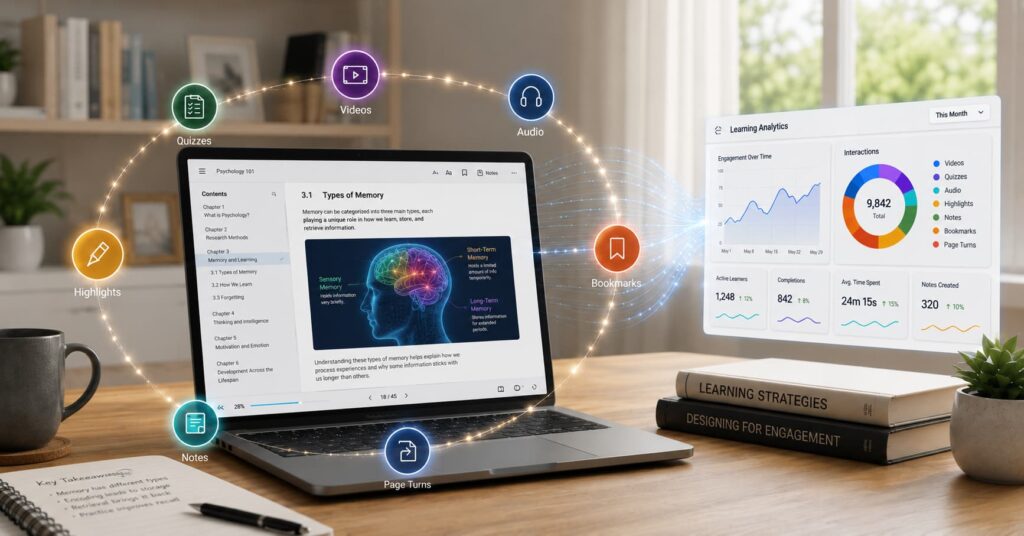
AI-Powered Reading: Features, Benefits, and Use Cases
The way we read has evolved dramatically over the last decade, first driven by smartphones and e-readers, and now transformed by AI-powered reading software. Instead of just displaying static text, modern tools actively help you process it. So if you’ve ever found yourself struggling to understand a complex passage or getting overwhelmed by dense information, AI-powered reading tools might be just what you need to make sense of it all.
In fact, the impact of these tools goes far beyond reading books at home. Today, AI reading tools are helping people tackle tough information in all kinds of professional and educational settings. And in this article, we’ll explore how different industries are using these tools to make reading, learning, and working so much easier.
What Is AI-Powered Reading?
AI-powered reading refers to tools and programs using artificial intelligence (such as natural language processing and speech recognition) to improve comprehension, literacy, and fluency. In other words, these tools act as active reading assistants. Instead of forcing you to read every word of a static page, they analyze the underlying meaning of the text so you can interact with, reformat, or listen to the information.
What Makes AI Reading Tools Different from Traditional Ebook Readers?
To better understand how these tools work, take a look at the following table that compares traditional reading and AI-powered reading.
| Feature | Traditional Reading | AI-Powered Reading |
| Pace | Manual speed (word-by-word) | Scalable (with instant summaries, highlighted key sections) |
| Interaction | Passive consumption | Active Q&A, summarizing, and custom explanations |
| Adaptability | Fixed vocabulary & difficulty | Adjustable reading level, instant definitions, and inline translation |
| Format | Visual text only | Flexible (Audio, visual mind maps, multi-language) |
Main Features of AI-Powered Reading Tools
Before choosing an AI-powered reading tool, it helps to understand the key features that make them so useful. Keep in mind that not every tool includes every feature. For example, some are built specifically for language learning, while others focus on improving general reading comprehension and speed.
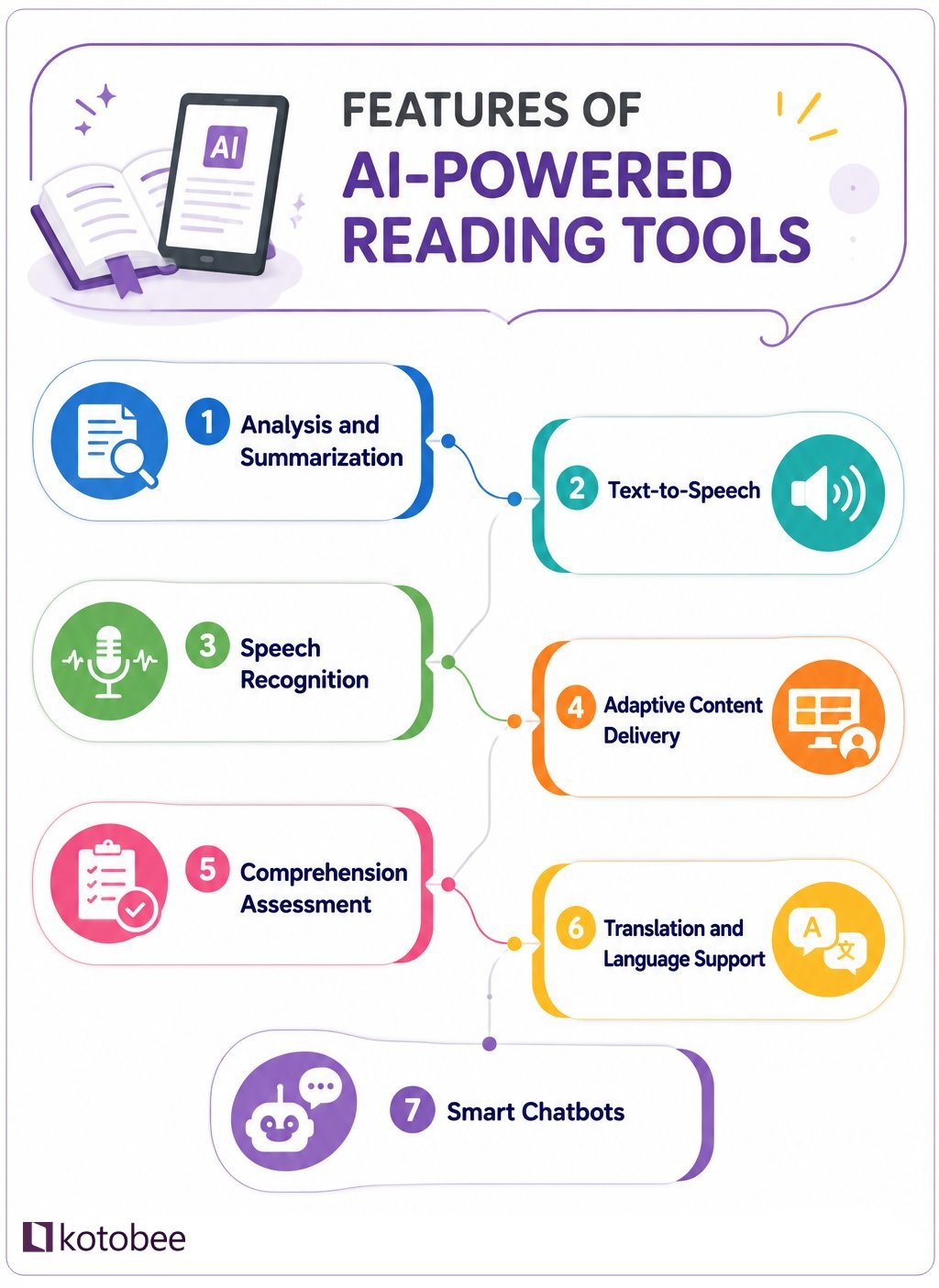
1. Analysis and Summarization
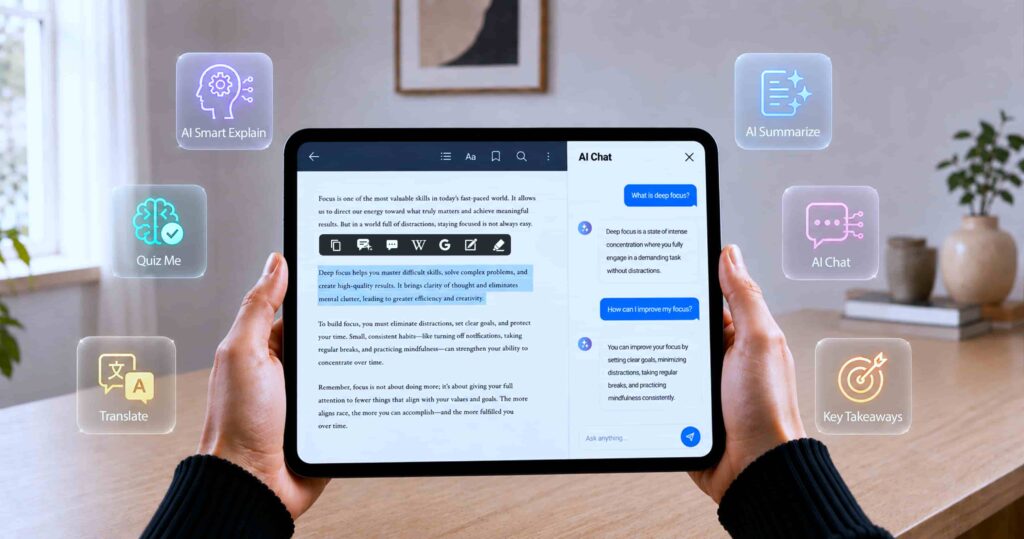
One of the most important features of these tools is their ability to analyze any text and give you a summary of any part of this text. Not only that, but since it understands the content really well, you can ask it any questions. So instead of having to go through a 500-page document, you can ask it to highlight key information, explain certain parts in a simpler way, or pull extra information about the topic.
2. Text-to-Speech
While this functionality was found in many tools long before the popularity of AI, AI-powered reading programs took it to a different level. Instead of just reading the text word by word in a flat, robotic voice, these tools let you choose from a variety of voices and accents that read your content in a natural-sounding way.
3. Speech Recognition
In literacy-focused programs, AI tools can actively listen as you read out loud. By tracking your spoken words against the text, it can then identify any mispronunciations, pauses, or skipped words in real time. This allows it to act as a personal tutor and provide you with immediate feedback, just like a skilled teacher might do.
4. Adaptive Content Delivery
Some reading tools use AI to assess your current reading level and adjust the material accordingly. For instance, it can instantly reword a dense technical paper to lower its reading difficulty. This way, you can use it to make complex concepts easier to understand without altering the core message.
5. Comprehension Assessment
Beyond just simplifying text, AI reading tools can actively check your understanding. The software can interact with you as you read by asking short follow-up questions or creating quick comprehension checks. By doing so, it’s able to measure how well you’ve absorbed the material and offer extra explanations where needed.
6. Translation and Language Support
Reading in a second language or tackling foreign texts often requires frequent dictionary lookups that can interrupt your flow. AI-powered reading tools facilitate this by offering real-time translations, defining complex terms in context, and explaining unfamiliar cultural idioms right on the page. This allows you to effortlessly navigate foreign content without losing your reading momentum.
7. Smart Chat Bots
Instead of manually skimming through hundreds of pages to find a single detail, smart chat assistants let you converse directly with your document. For example, readers can ask open-ended questions about character motives, specific data points, or overarching arguments, and receive instant answers with direct citations. This turns passive reading into an interactive conversation, which saves time when working with lengthy books or technical papers.
Types of AI-Powered Reading Tools
It’s important to know that AI-powered reading tools aren’t one-size-fits-all; they come with different features and serve different purposes. To be able to choose the best one for your needs, take a look at the four main types of AI reading tools available today:
1. Literacy Reading Tools
Designed primarily for students, language learners, and early readers, these tools focus on teaching foundational reading skills. They use features like real-time speech recognition and instant pronunciation feedback to listen as you read aloud, just like a proficient tutor who helps you improve fluency and reading confidence. A famous example of such tools is Read Along by Google, which is a free reading tool for young readers.
2. Research Reading Tools
Built for academics, students, and professionals, these tools facilitate the challenging task of writing literature reviews. Instead of reading dozens of papers word-for-word, AI-powered research tools can summarize complex studies, map citation networks, extract key findings, and highlight where different authors agree or disagree. There is also another tool from Google that is especially beneficial for researchers, and that is Gemini Notebook.
3. Personal and Long-Form Reading Tools
Focused on everyday reading, these applications help you manage and digest ebooks and long-form web articles. They often include text-to-speech audio for listening on the go, summarizing tools to simplify dense passages, and interactive chat features that let you ask questions directly about the content. Authors can use Kotobee Reader, for instance, to provide their users with a smart AI assistant that delivers instant summaries, text-to-speech narration, and a chatbot that answers any question you have about the ebook content.
4. Document and Data Analysis Tools
These tools process large volumes of structured and unstructured documents, and can be especially helpful for corporate, legal, and technical environments. They allow users to quickly extract specific data points, cross-reference complex reports, evaluate comprehension across teams, and turn dense documentation into clear, actionable insights. One example is UiPath Document Understanding, which is one of the most popular platforms used by corporate operations to automatically read, extract, and process data from massive stacks of documents.
Benefits of Using AI-Powered Reading Tools
Once you see these features in action, it becomes obvious just how powerful AI-driven reading software really is. Using these tools can fundamentally transform your relationship with written content across every area of your life. Here is how these tools can help you:
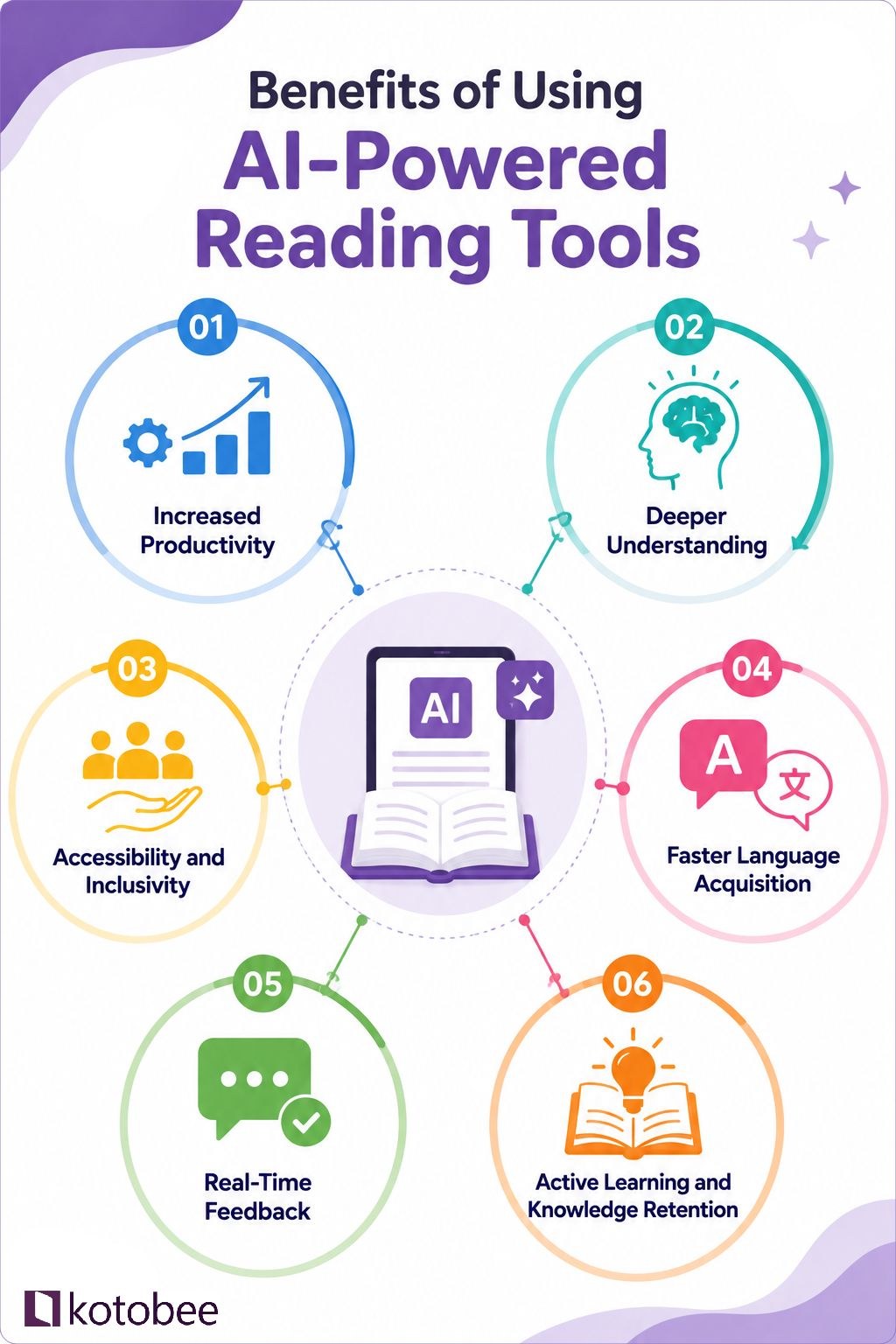
1. Increased Productivity and Time Saving
AI reading tools can help you skim through long documents in seconds instead of hours. Instead of reading a 50-page report line-by-line, the software pulls out the most important facts and main points right away. You can also type questions directly into the document to find exact answers fast, so you skip the hassle of searching through pages yourself.
2. Better Comprehension and Deeper Understanding
When you run into confusing phrases or complicated sentences, you can use these AI-powered tools to rewrite the text for you in plain, everyday language. And with the availability of AI chatbots, you’ll be turning passive reading into a quick back-and-forth conversation, which can help you understand difficult topics much faster. The AI can also turn dense written reports into simple summaries, visual outlines, or spoken audio to fit how you learn best.
3. Accessibility and Inclusivity
These tools break down barriers for people with learning differences, visual impairments, or busy schedules. For readers with ADHD or dyslexia, AI reduces brain overload by breaking up giant blocks of text into short, clean sections. It can also transform dense information into visual representations like mind maps or comparison tables, making complex ideas easier to digest for visual learners. Additionally, text-to-speech features with hyper-realistic voices allow visually impaired or simply busy users to listen to any file.
4. Faster Language Acquisition and Skill Building
AI acts as a patient coach for students and foreign language learners. As you read out loud, speech recognition listens to your voice and helps you correct mispronounced words or tricky sentences. It also translates foreign text accurately by understanding the overall context, rather than giving awkward word-for-word translations that do not make sense.
5. Real-Time Feedback and Practice Loops
When practicing reading out loud, some AI tools can catch mistakes right away. If a reader skips or mispronounces a word, it shows the correct pronunciation and asks them to try again. This quick practice–feedback–retry process stops bad habits before they form and helps readers lock new words into long-term memory faster.
6. Active Learning and Knowledge Retention
AI reading tools can turn reading from a passive activity into an opportunity for active review. Some tools can generate comprehension questions, quizzes, flashcards, or other practice activities based on the material, giving readers a way to test what they remember and reinforce important concepts.
Real-World Use Cases of AI-Powered Reading Tools
The true power of AI reading software isn’t just in its technical features, but in how seamlessly it adapts to different environments. People don’t just read for one reason; a student studying for an exam uses text very differently than a professional reviewing a dense report.
To see how these tools make a practical impact across various setups, let’s look at some of the most common ways they’re being used right now.
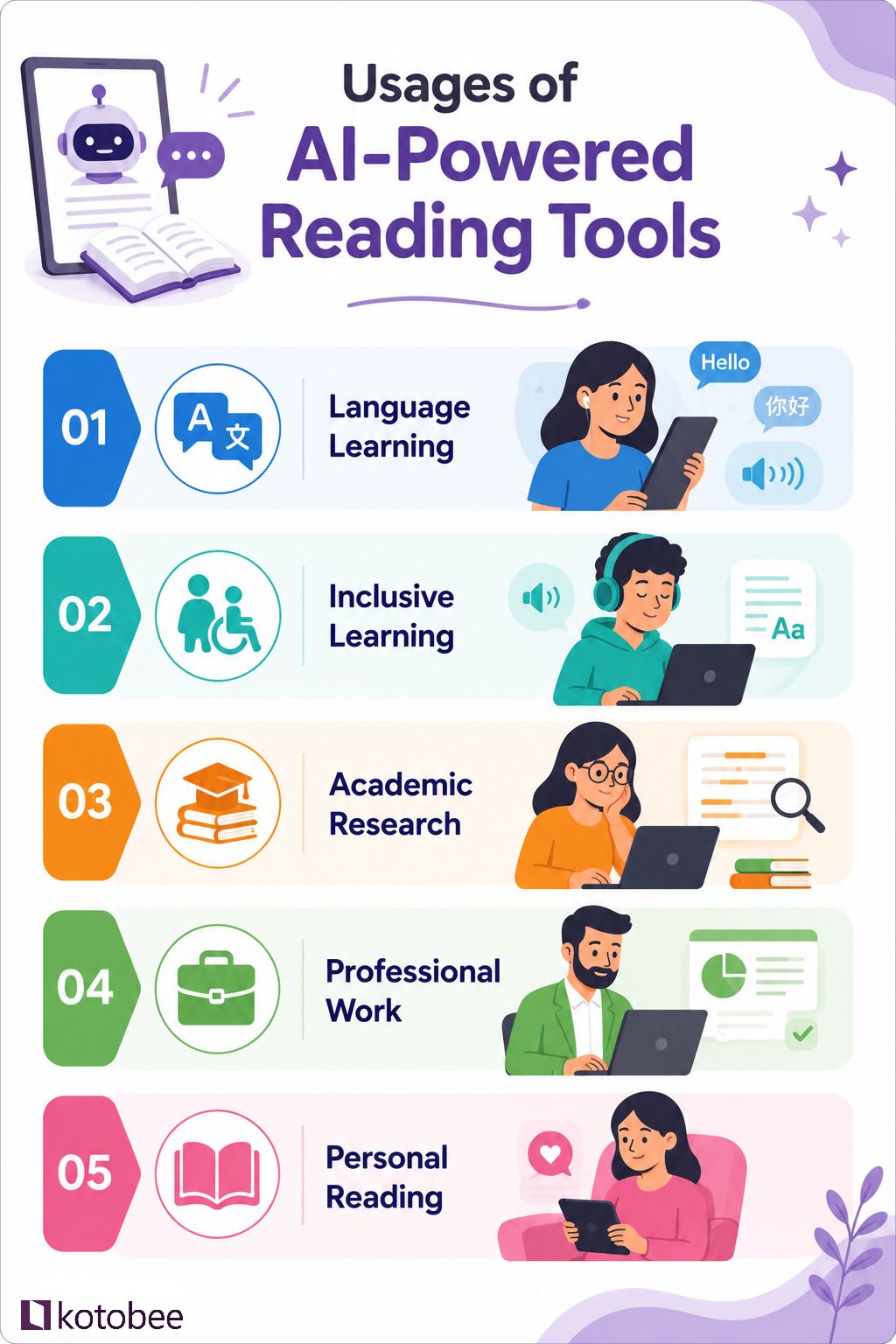
1. Language Learning
For both kids and adults, language learning can be much easier when using AI reading tools. Acting as both a native speaker of foreign languages and a patient tutor, these tools listen to you read, correct any errors in pronunciation, explain any grammar rules with clear examples, and break down unfamiliar idioms or vocabulary.
2. Accessibility and Inclusive Learning
From preschools to secondary classrooms, AI-powered reading programs can help teachers differentiate instruction for students at different skill levels. These tools can break down complex assignments into step-by-step instructions, generate visual outlines like mind maps to explain tricky concepts, and create custom practice activities. And for students with dyslexia, ADHD, or visual impairments, AI provides essential support, like dictating written work or converting text into clear audio.
3. Academic Research
When it comes to academia and research, these tools can make going through vast amounts of scientific papers much faster. Instead of reading every paper line-by-line, you can ask the AI tool to pull out specific data, verify citations, or check research findings across multiple resources.
4. Professional Work
AI-powered reading tools can act as personal assistants in corporate settings. In other words, they can help you handle high-volume administrative tasks by scanning through months of emails and shared project files to answer direct questions about project statuses or past decisions. They can also help your team prepare for meetings by generating concise executive briefs from long slide decks.
5. Personal Reading
Reading for pleasure or for self-study can be much smoother when you don’t have to break your focus to look things up. Using an AI-powered reading tool, you can interact directly with your ebooks to get instant chapter summaries, clarify confusing plot points, or request plain-language explanations of dense passages. Integrated text-to-speech audio also lets you switch effortlessly between reading on-screen and listening on the go, making everyday long-form reading far more approachable and engaging.
Using Kotobee Reader’s AI Tools
Kotobee Reader integrates AI-powered reading features directly into ebooks created with Kotobee Author. This allows authors and educators to deliver truly interactive reading experiences and give readers instant access to smart tools, explanations, and summaries right inside the book. Here is a breakdown of these smart features and how they can help your audience:
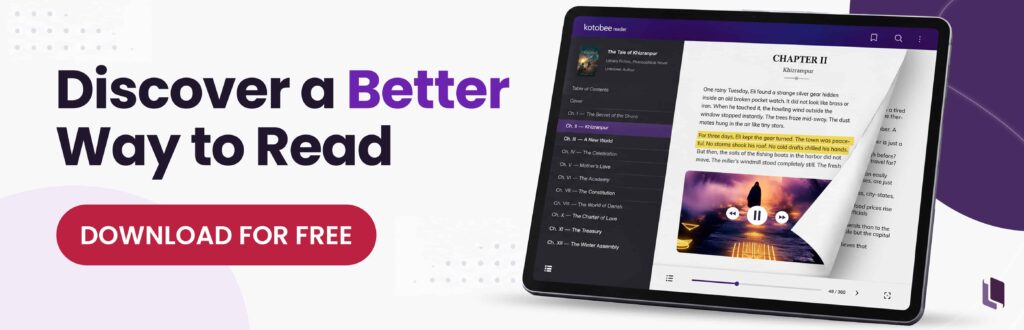
- Smart Chat: This tool allows your readers to interact with an AI-powered chatbot within your ebook’s interface. They can ask it to provide explanations, summaries, and review questions based on the currently open chapter.
- Smart Explainer: If your readers just need a quick definition of a word or a small phrase, they can simply highlight it and let this tool provide them with comprehensive definitions, background details, related concepts, and illustrative examples. Additionally, it can detect the interface language of Kotobee Reader and deliver information to match it.
- AI Text-to-Speech: Using Google Speech, you can select from a variety of natural, human-sounding voices to read your content aloud to your users. This can be especially helpful in language learning and for readers with accessibility needs.
If you’d like to view all of these features, make sure to check out the following ebook by clicking on the button below:
Wrapping Up
Whatever field you’re in, whether it’s education, corporate training, or academic research, AI-powered reading tools can make your job so much easier. They can increase your daily productivity, help explain complex concepts, and take the stress out of dealing with huge amounts of information.
At the end of the day, these tools do more than just save you time; they make learning so much more accessible. You could be mastering a new language or simply tackling your daily work, and an AI reading tool will still act as a patient, reliable assistant to help you get things done with way less effort.
More from Our Blog